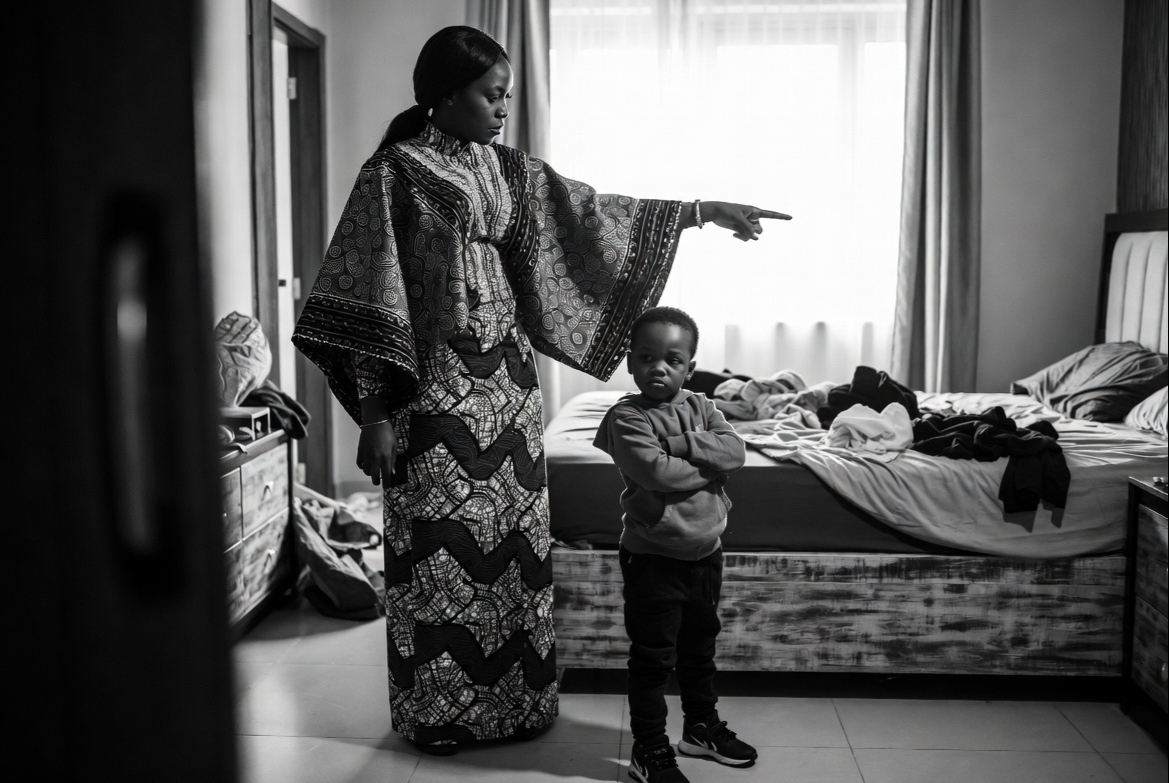


There is a question every father eventually has to sit with: Am I leading my children, or am I simply controlling them? The two feel the same in the moment. They are not.

Fatherhood is one of the most powerful roles a man will ever hold. Like all power, it can be used well or poorly. The line between authority and control is thin enough that most fathers never notice they've crossed it, yet the consequences play out across decades in how their children love, trust, take risks, and see themselves.
8 Ways to Effortlessly Raise Eco-Friendly Children
This is not a list of rules. It is a mirror. Read it slowly because authority earns respect, while control demands it.
1. Authority Shapes Character, Control Shapes Behaviour
A father operating from authority cares about who his child is becoming. A father operating from control cares about what his child is doing right now.
Authority is patient; it plants seeds. Control is urgent; it wants results today. The child raised under authority develops an internal compass. On the other hand, a child raised under control looks outward for permission.
2. Authority Explains, Control Simply Commands
When you have genuine authority, you are not afraid to say "here's why." You give reasons because you respect your child's developing mind.
Control avoids explanation; it hides behind phrases like "because I said so." That phrase shuts a door. Over the years, your child stops asking questions altogether, not just of you, but of the world.
3. Authority is Comfortable with Disagreement, Control Is Not
A father with true authority can sit across from a child who says, "I don't agree with you, Dad," without feeling threatened. He can engage it, debate it, and even be changed by it.
A controlling father treats disagreement as defiance. He confuses his ego with his leadership. The result? Children who agree with everything to your face and nothing in their hearts. "If your child is only obedient when you're watching, you haven't built authority. You've built a performance."
4. Authority Builds Trust, Control Builds fear
Children raised under authority come to their father when things go wrong. They know the conversation might be hard, but they also know they will be heard and guided.
In contrast, children raised under control hide things. They learn early that mistakes bring punishment, not understanding. They become skilled at concealment, a skill that follows them into adulthood.
5. Authority Allows Failure, Control Prevents It
A father with authority understands that failure is part of growing up. He lets his child try, fall short, and try again, sometimes painfully. He is present for the aftermath, not the prevention.
In comparison, a controlling father cannot bear to watch his child fail, often because it reflects on him. He steps in too quickly, fixes too much, and quietly communicates: "I don't believe you can do this."
6. Authority Is Secure, Control Is Anxious
Control almost always comes from a place of deep anxiety, such as fear of losing influence, fear of what others will think, and fear of your child making choices you wouldn't.
Authority, by contrast, comes from a settled sense of self. The secure father does not need his child to validate him. He leads from a full cup, not an empty one.
7. Authority adapts as Children Grow, Control Stays Rigid
A five-year-old and a fifteen-year-old need different things from their father. Authority is flexible enough to recognise this by loosening the reins as trust is earned and maturity develops.
Control applies the same rules to a toddler and a teenager, treating age as irrelevant. The teenager under control doesn't rebel out of defiance; they rebel out of suffocation. "Your job is not to raise a child who obeys you. It is to raise an adult who can think without you."
8. Authority Models What It Preaches, Control Exempts Itself
A father with genuine authority holds himself to the same standards he sets for his children. He apologises when he is wrong. He admits when he doesn't know something. He shows his children what accountability looks like by living it.
Conversely, a controlling father operates under a different set of rules; one for the children, one for himself. Children see this clearly, even when they say nothing.
9. Authority Develops Independence, Control Creates Dependency
The deepest goal of fatherly authority is to make itself unnecessary. A father leading well is always preparing his children to leave well. He gives them tools, teaches them to think, and gradually steps back.
Meanwhile, a controlling father, consciously or not, keeps his children needing him. He solves problems they should be solving. He makes decisions that they should be making. Then he wonders why they seem helpless.
10. Authority Listens First, Control Speaks First
Ask any adult what they wish their father had done differently, and a remarkable number say, "I wish he'd listened more." Authority includes the discipline of listening, of hearing your child's perspective before offering yours.
Control rushes to correct, redirect, or lecture. The child who is not truly heard will eventually stop trying to be.
11. Authority Separates the Behaviour from the Child, Control Often Doesn't
When a child misbehaves, a father with authority addresses the action: "What you did was wrong, let's talk about it."
Whereas, a controlling father often attacks the identity: "You're always so irresponsible," or "Why can't you ever get anything right?" These words lodge deep. Children believe what their fathers say about them. Call a child irresponsible long enough, and they will live up to it.
12. Authority Leaves a Legacy, Control Leaves a Wound
Decades from now, your children will either speak of you as a man who helped them become themselves, or they will be in a therapist's chair trying to understand why they never felt enough. That is not a small thing.
Authority creates adults who love freely, risk bravely, and parent wisely. In contrast, control creates adults who either repeat the pattern or spend years unravelling it.
Final Thoughts
Most fathers do not set out to control their children. They set out to protect them, to raise them well, to not make the mistakes their own fathers made. However, good intentions do not automatically produce good outcomes. Intention matters far less than awareness.
The shift from control to authority is not a single decision. It is a daily, sometimes hourly, recalibration. It requires you, as a father, to ask yourself uncomfortable questions: Am I doing this for my child or for myself? Am I reacting from love or from fear?
Your children do not need a perfect father. They need a present one. Someone honest enough to grow alongside them. That is what authority looks like. Not dominance. Not distance. Not performance. Just a man, doing the slow, steady, unglamorous work of raising someone whole.